






February 8, 2026
 Thank you very much for your ongoing support. My name is Hikari Maruta, Project Officer of the Yemen division.
Mr. Nambu (who is in charge of our newsletter) requested that “the person in charge directly and honestly report on the ground activities,” so I am writing this. I would like to take this opportunity to report on the activities of our Yemen division to date.
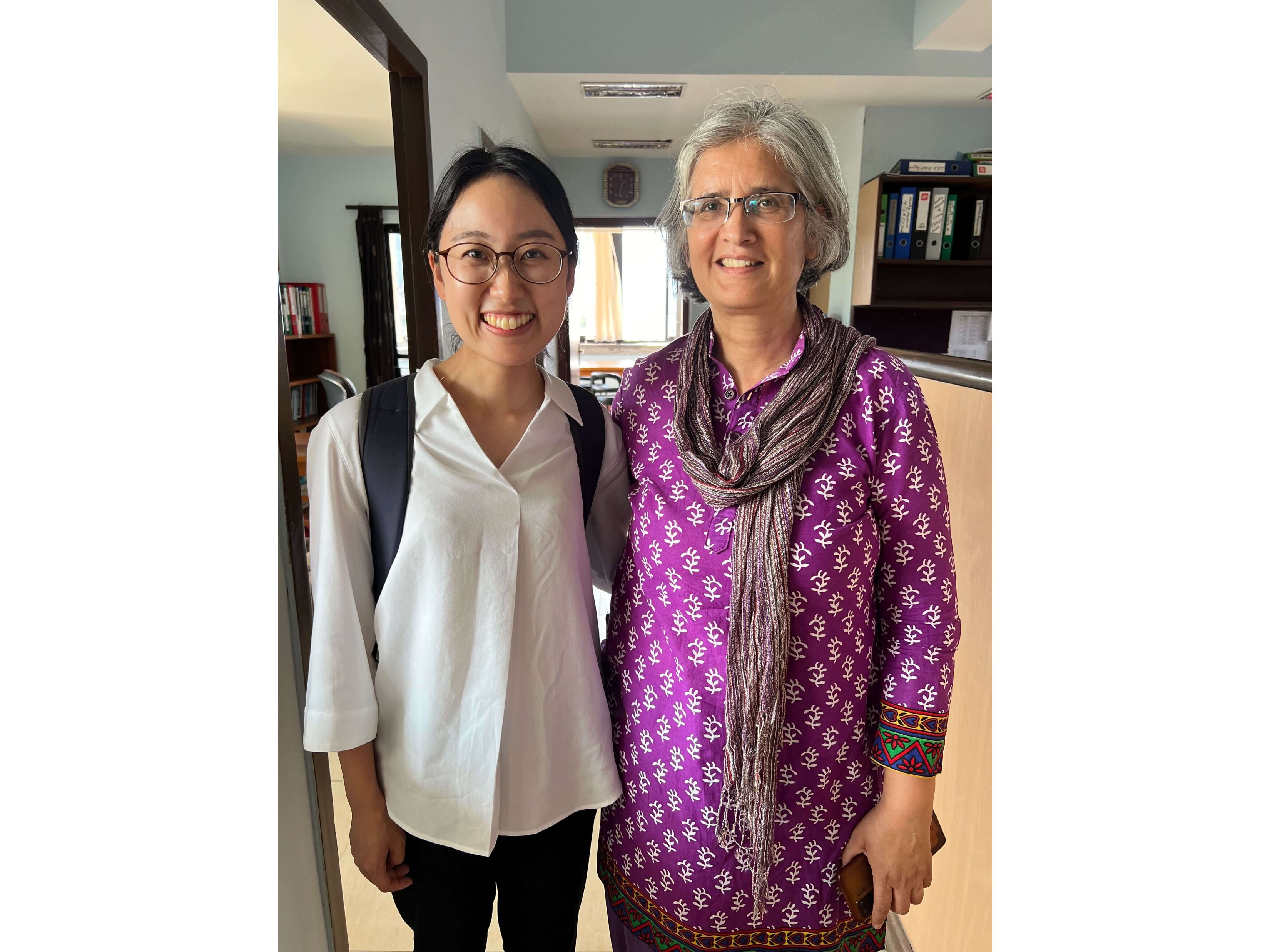
▲Myself (Maruta), on the left.
1. The beginning of our activities in Yemen and our journey so far
We began undertaking activities in Yemen in April 2021. Back then, Yemen was already embroiled in a prolonged conflict between the Ansar Allah Movement (the so-called Houthis), and the Internationally Recognized Government of Yemen — a situation often described as the “world’s worst humanitarian crises.”
It was in this context that we began our activities in Yemen, motivated by one of Accept International’s core values — to “address the most serious problems and those for which there are limited people willing to take action.”
When I first started working on the Yemen project from Japan, the first difficulty I encountered was that of communicating with local staff members. The internet instability is such that even if I send a message in the morning, I don’t receive a reply until late in the evening. Even when we schedule a meeting in advance, the audio is often unstable.
Our division initially felt frustrated by the lack of adequate infrastructure (a challenge unique to conflict zones), but we began by working to improve the environment as much as possible.
Now, those on the ground are supporting young people who were formerly members of the Houthis at a special detention center. The center is located on the very front lines of the conflict, adjacent to Houthi-controlled territory.
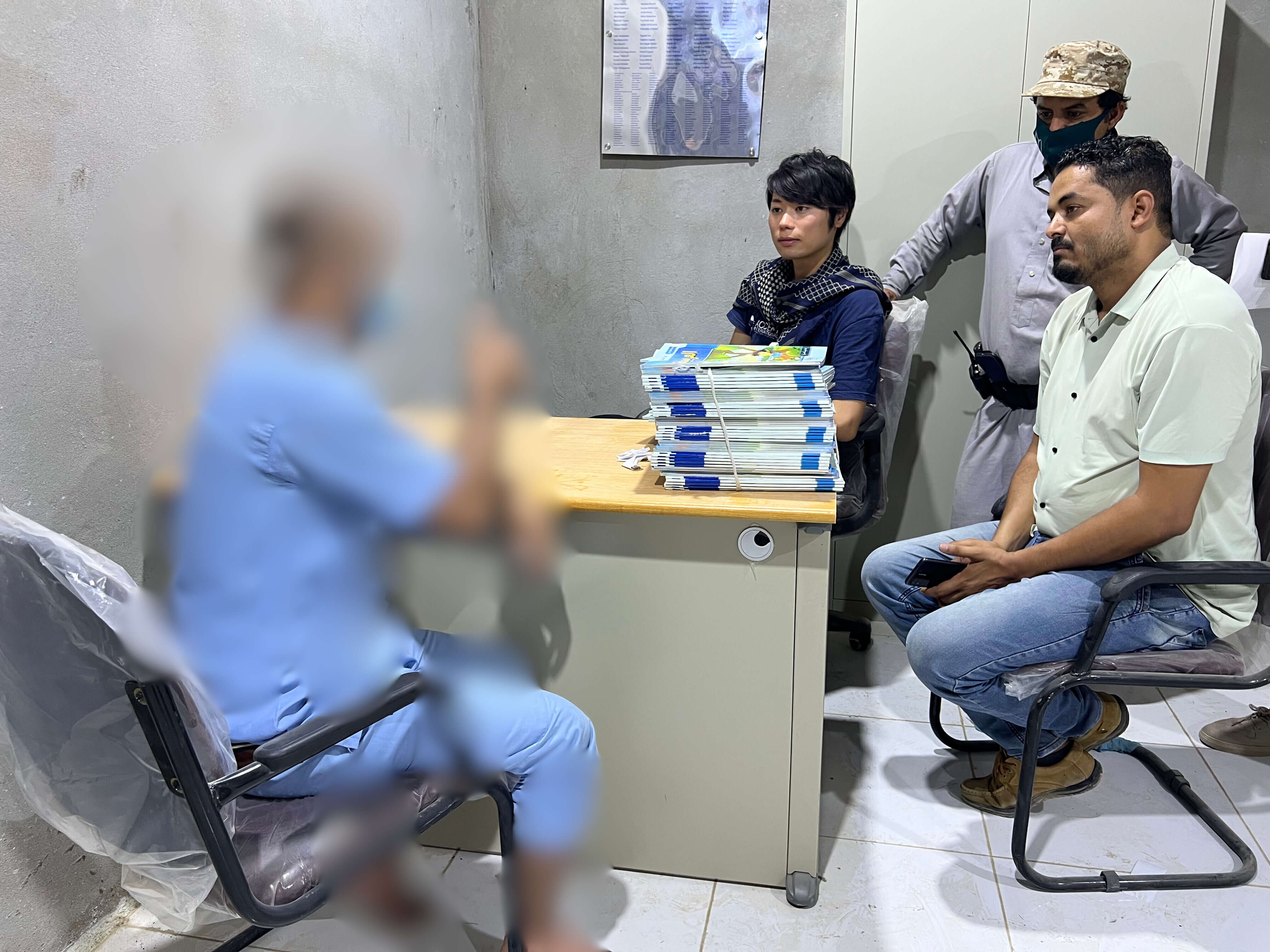
▲Care counseling in the center
When detainees endure long-term detention with no release date in sight, they often suffer from deep physical and mental trauma. Even if they are released back into society, they can find themselves isolated all over again, unable to find a place to belong to, or a way to earn a living.
In order to return to society and live peacefully, detainees need not just material aid or short-term support, but time to heal their minds and bodies.
However, neither of the two special detention center we were initially supporting had the necessary environment to provide adequate rehabilitation support.
Therefore, despite the communication barriers with local staff members, we proceeded to construct the environment and facilities necessary for rehabilitation entirely from scratch.
2. Visiting the project site
Once the facility was completed and rehabilitation support was properly underway, I headed to the project site.
The purpose of my visit was to check the progress of various support activities (such as vocational training for income generation), and to monitor and improve these activities through continuous dialogue with local staff and stakeholders.
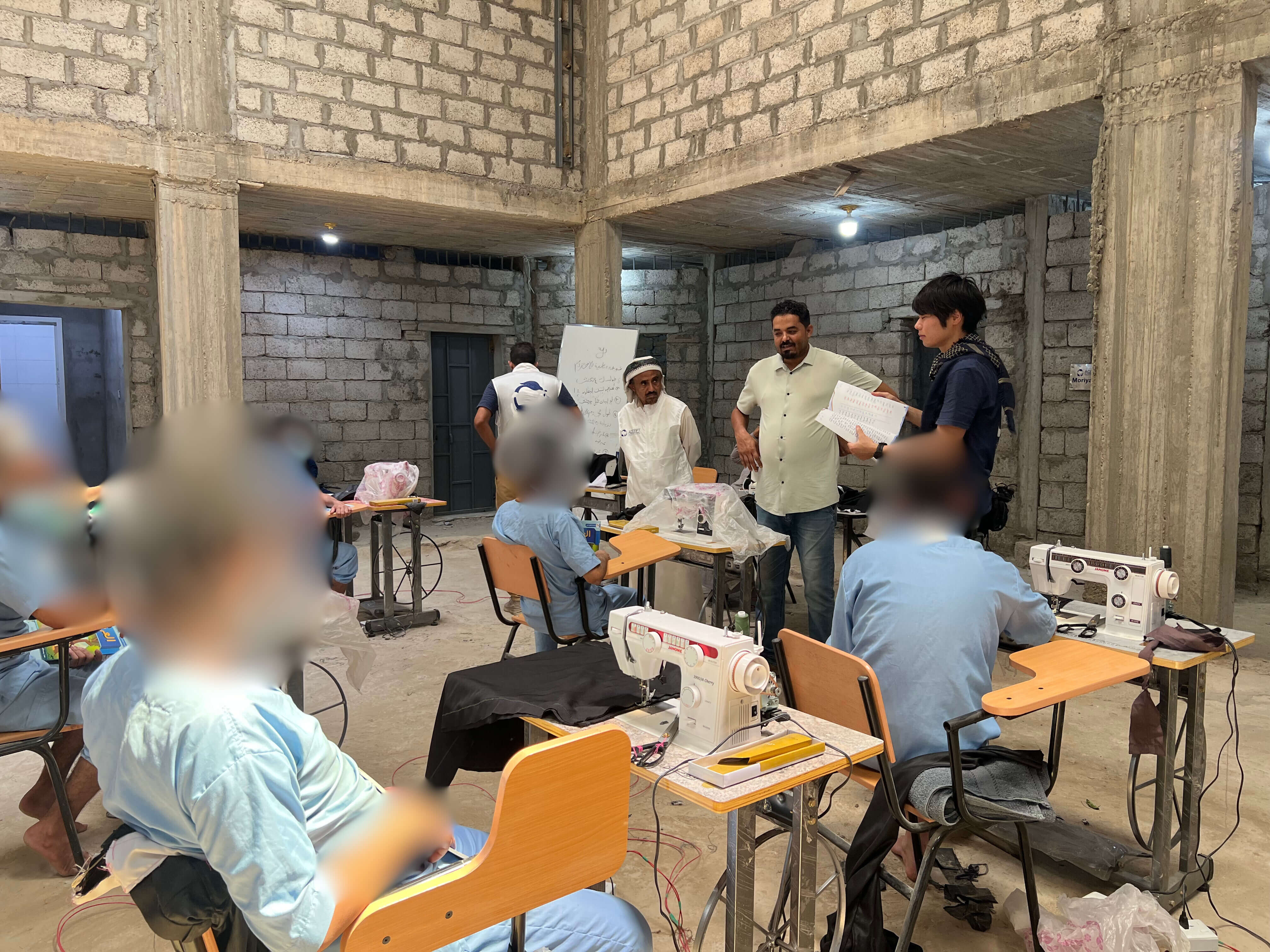
Of all the things I saw during that visit, the sewing training is what remains vividly in my memory.
Until I actually went to the center, I could only understand the situation on the ground through a screen, and I couldn’t necessarily feel that the detainees were making tangible progress toward the goal of reintegrating into society.
However, what I saw when I actually got there was the detainees, paying no attention to me or anything around them, their eyes shining with intense focus as they worked on their sewing machines.
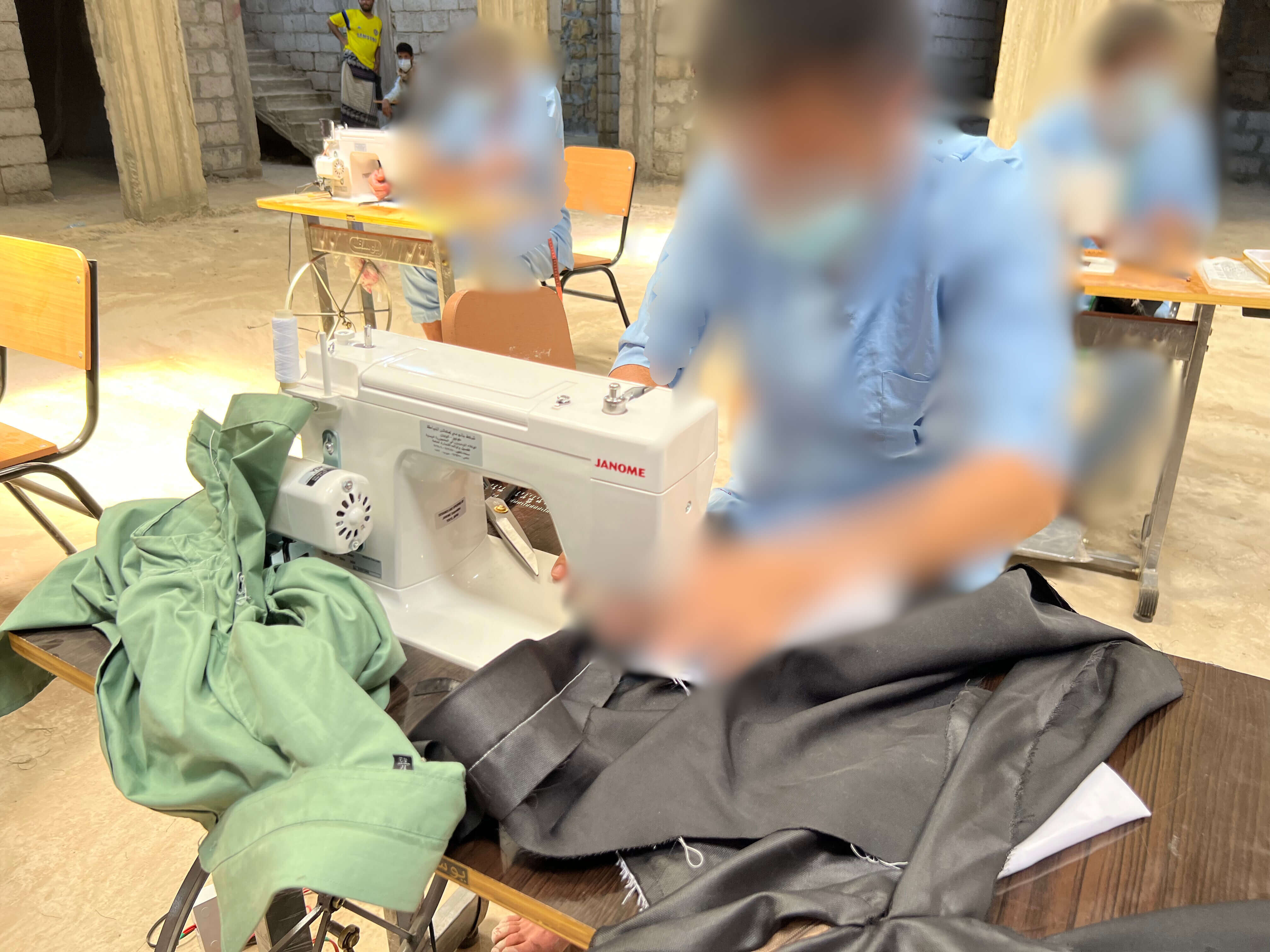
▲A young person hard at work on a sewing machine
When I saw them, I thought to myself: “this could truly change their lives.”
I remember being at a loss for words as I recalled the journey from nothing, step by step, from completing the facility to getting the support services on track.
Once again (as I mentioned in a previous activity report), voices from the ground have also relayed the following messages to us:
“I am deeply grateful to Accept International’s program and all the donors for this training, which has allowed me to overcome the past trauma I faced in armed conflict. I feel like I can do something new once I am released, and I am proud of myself for moving forward into the future.”
When I heard those words, I became convinced that their lives were beginning to change for the better.
Furthermore, I was once again reminded that every single sewing machine in the center, every single material the detainees have at hand, and even the building itself are undeniably thanks to the support from donors.
We would like to express our sincere gratitude to everyone who has given us their warm support.
3. Update on current activities
Recently, outdoor farming began at the special detention center.
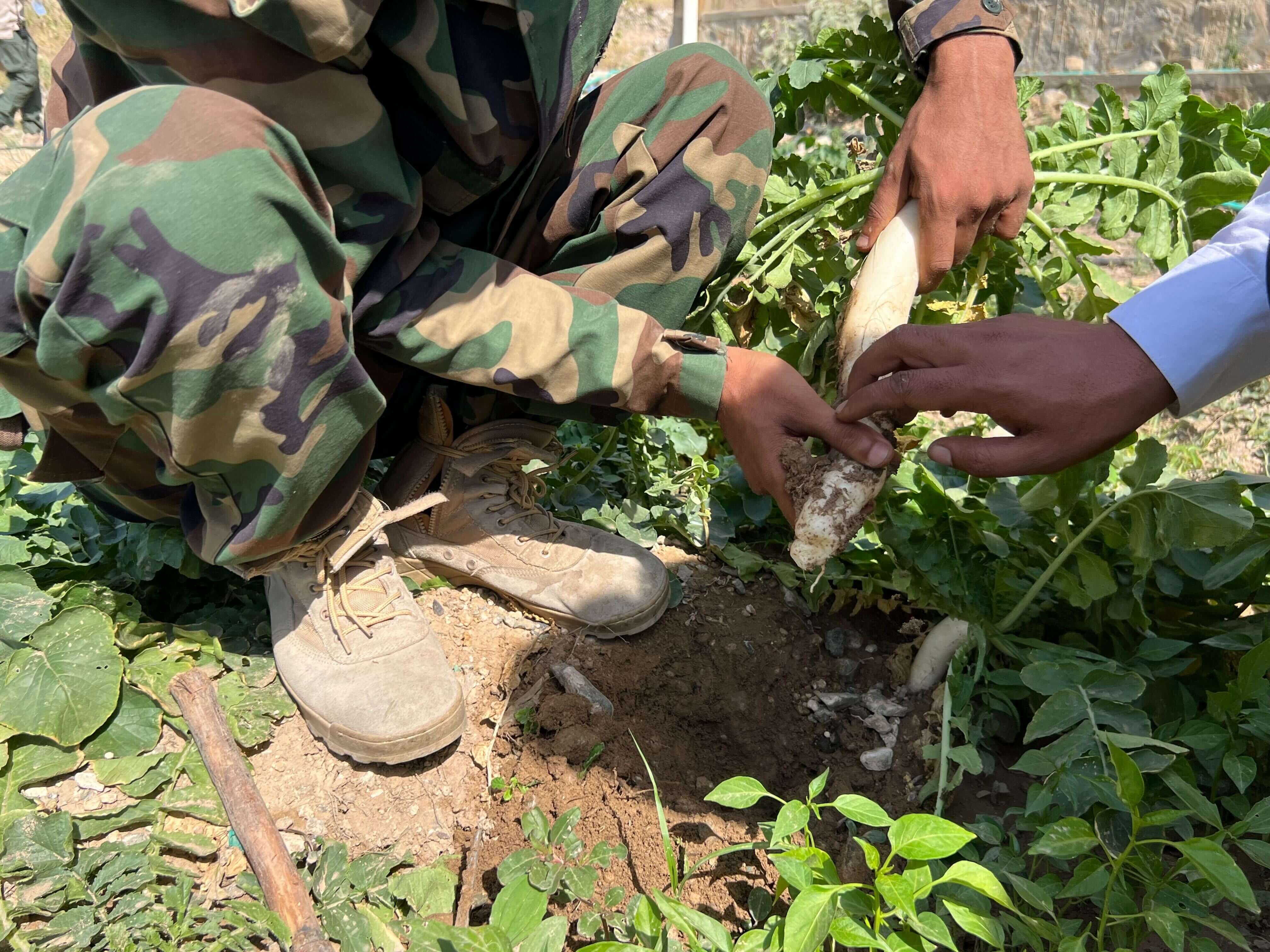
▲Growing white radish in a field
Until the farming activities began, the detainees generally had to stay inside the facility and were not allowed to go outside for risk management reasons.
However, going outside, touching the soil, and growing crops also contribute to the detainees’ physical and mental recovery, so they are now permitted to go outside while working in the fields.
We have received the following comments from the detainees:
“Simply going outside and soaking up the sun makes me feel refreshed.”
“I’m happy that I can now eat a variety of vegetables.”
Additionally, the local staff donated a gas stove to cook the vegetables harvested from the fields. What’s more, it was donated by a family member who agreed to use a portion of a deceased family member’s inheritance “to support the community.”
Thanks to this warm generosity, the detainees have gradually been able to eat more nutritious meals.
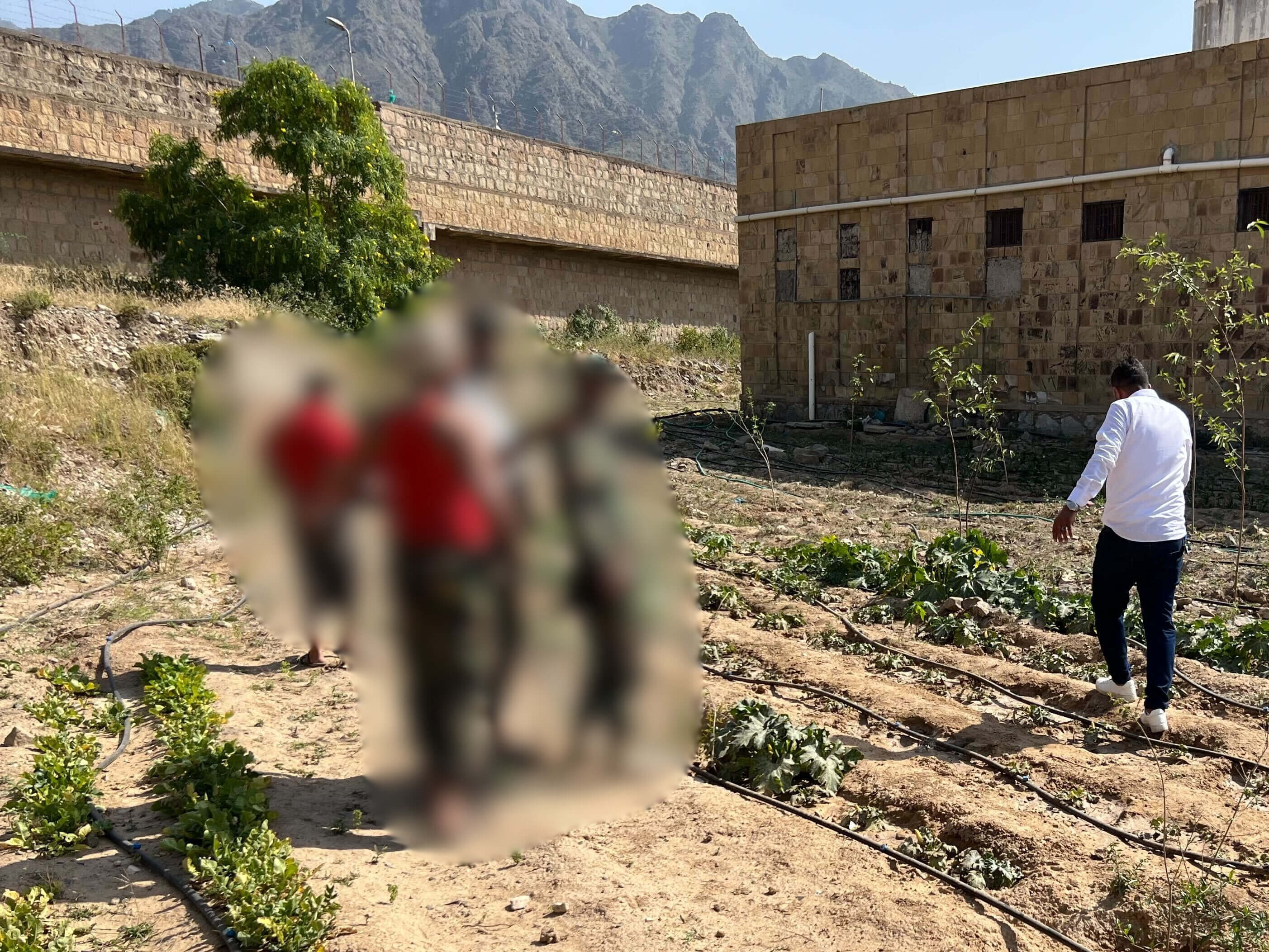
▲Young people enjoying working in the fields outdoors
In addition to the young detainees in the center, we also provide healthcare and livelihood support to local communities affected by armed conflict. In particular, we focus our support on socially vulnerable groups such as ethnic minorities, women, and victims/survivors of torture.
With psychological trauma care, we offer vocational training that directly leads to localized income generation. This includes training in areas such as sewing, motorcycle repair, solar panel installation, mobile phone repair, and hair and makeup services.
In recent years, it has become increasingly common to see programs such as this, through which young ex-detainees can learn side by side with local community members.
Rather than distinguishing between “former combatants” and “local residents,” I believe that treating them as equal members of the community is extremely important in promoting reconciliation within the region.
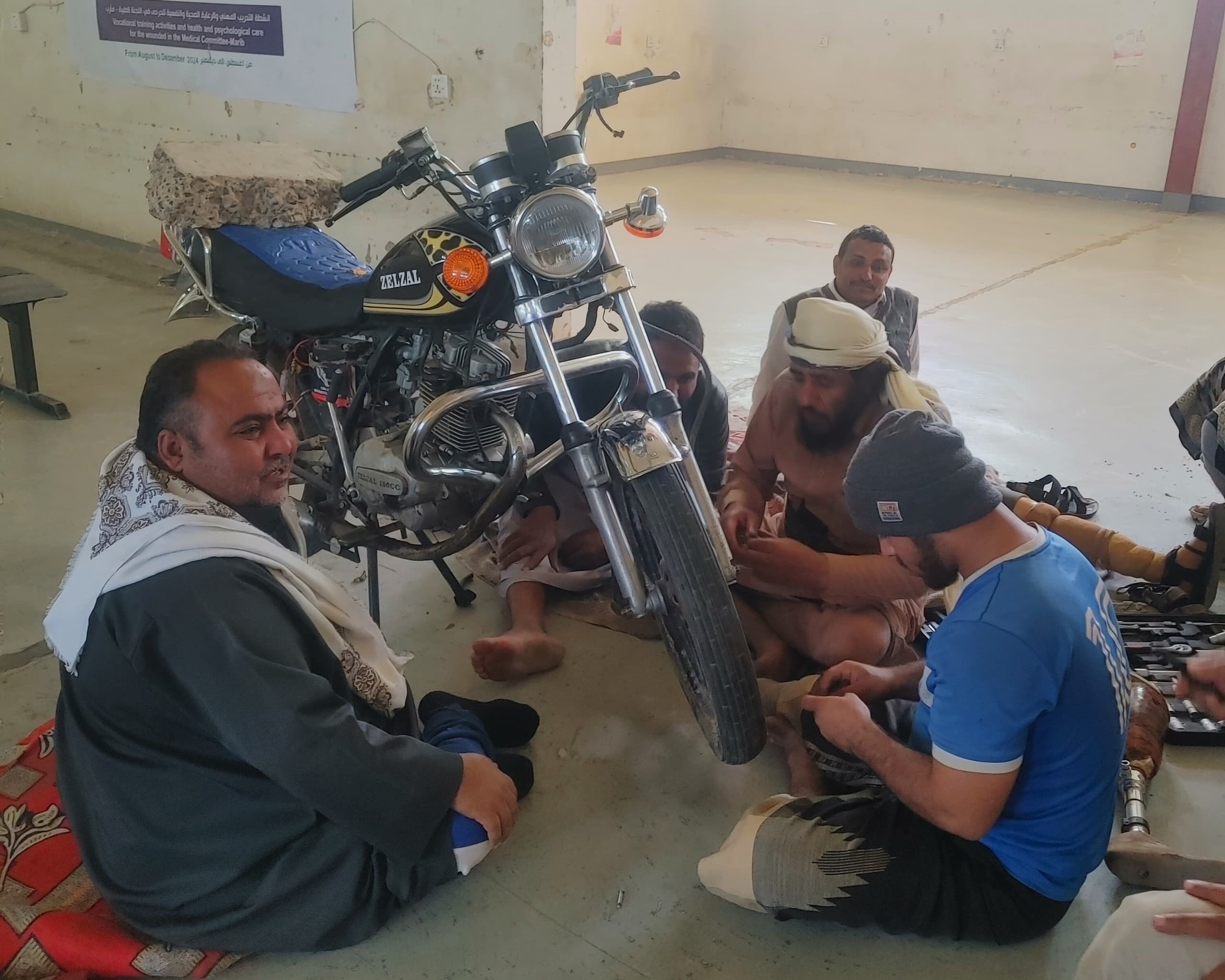
▲Motorcycle repair training for local communities
4. Future Prospects
On a more somber note, tensions in Yemen have recently risen once again.
The Houthis have cracked down on their territorial control (in areas outside of our operation), and there have been a series of incidents in which United Nations staff were detained. In December 2025, there was a territorial struggle between the Saudi Arabia-backed Internationally Recognized Government of Yemen and an organization backed by the United Arab Emirates (UAE) that sought independence for South Yemen.
Furthermore, Amgad, the country director in Yemen, recently reported the following: “fighting broke out nearby while we were traveling … checkpoint blockades were put in place and our movement was restricted.”
Although the fighting has since subsided, the situation remains volatile.
Therefore, we are giving extra consideration to the safety of our local staff in the course of undertaking our usual activities.
Bearing witness to these difficult situations on a daily basis has led me to strongly believe that it is essential for each young people caught in the cycle of hatred to break free from it and live as an agent of peace.
We are in close discussion with the local government to expand our comprehensive rehabilitation support to all of Yemen, so that young people throughout the country can break the cycle of hatred.
We will continue to work steadfastly towards a Yemeni society where each and every person can live in peace. We would be grateful for your continued warm support.
5. The thoughts of the local staff on the front lines
Finally, we would like to share a message from Amgad, our Country Director on the front lines:
~From Amgad~
My name is Amgad, and I am the Country Director of the Yemen Division.
Each and every day, we build on our front-line efforts and do what needs to be done for those left behind by the armed conflict. We truly appreciate your empathizing with and supporting the individuals who are in this difficult situation. It is because of your support that we are able to continue this unique and important work in Yemen.
It will certainly not be an easy path, but we on the front lines will continue to do our utmost to bring peace and hope to Yemen.
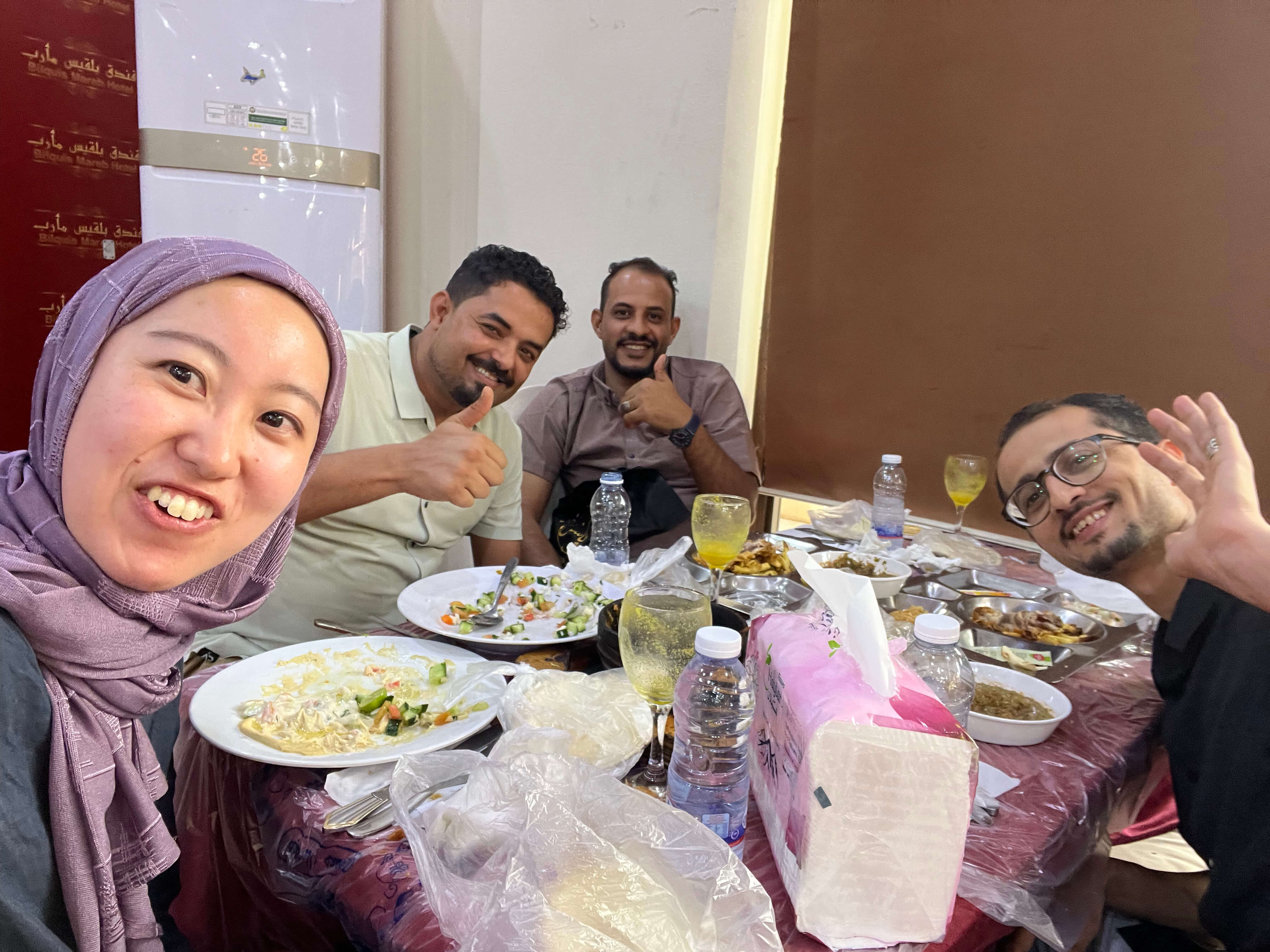
▲A photo with local staff (Amgad is on the far right)