





December 3, 2025
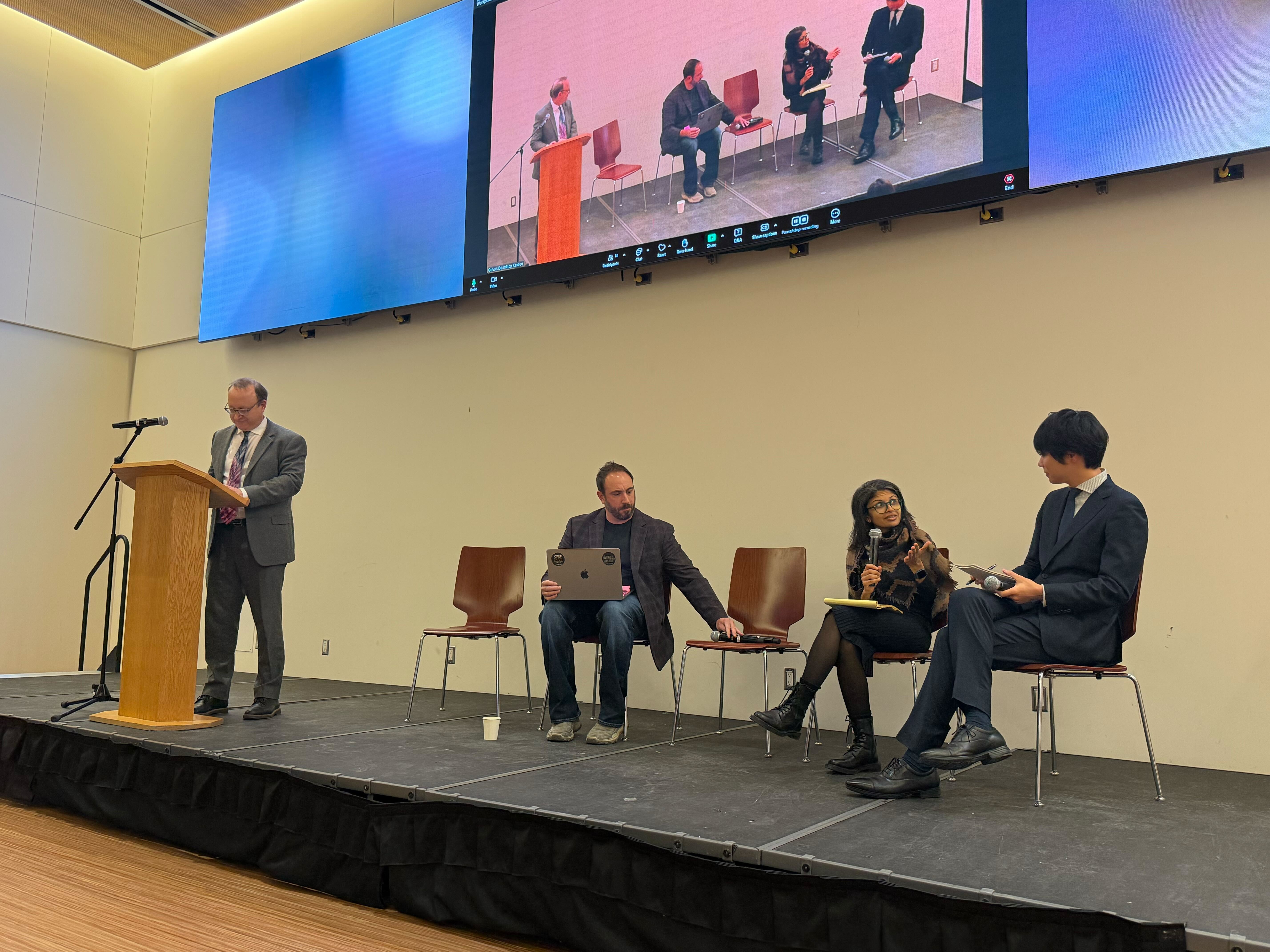
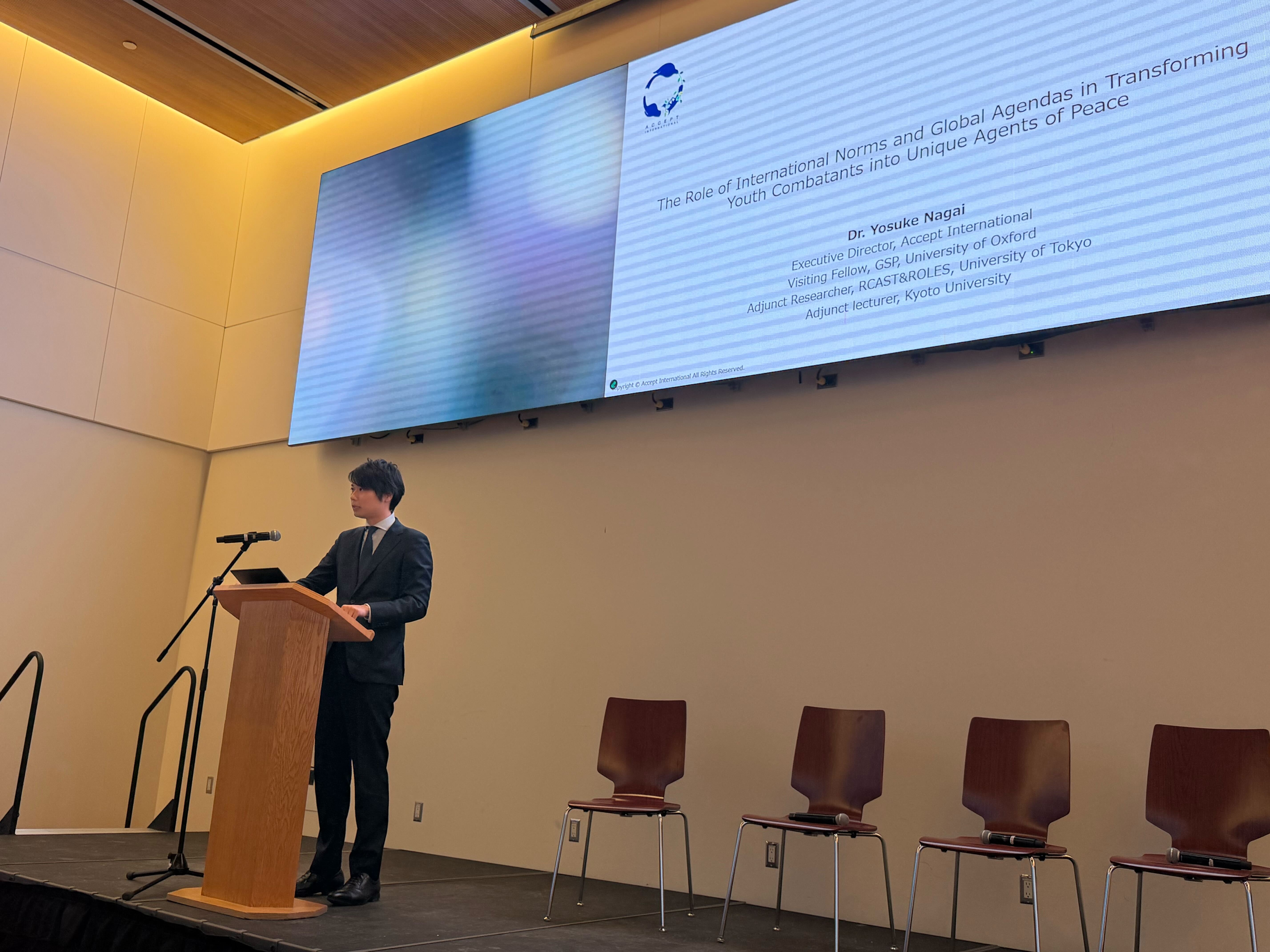 On November 24, in Canada, the University of Ottawa, Accept International, and the Global Taskforce for Youth Combatants (GTY) led by Accept International co-hosted the international symposium titled “The Role of International Norms and Global Agendas in Transforming Youth Combatants into Unique Agents of Peace.” This symposium marked the second edition, following the first held in New York in October 2023.
The symposium focused on the often-overlooked issues affecting Youth Associated with Non-State Armed Groups (YANSAG), taking into account key global agendas such as the Sustainable Development Goals (SDGs), the UN Youth Strategy, Women, Peace and Security (WPS), and Youth, Peace and Security (YPS). In particular, discussions emphasized the empowerment and social reintegration of YANSAG, who, unlike Children Associated with Armed Forces and Armed Groups (CAAFAG: Child Soldiers), often fall outside the scope of support once they reach the age of 18. The symposium explored the critical role the international community should play in addressing these challenges, with a focus on tackling the root causes of armed conflict.
The event opened with a keynote address by The Honourable Robert Oliphant, P.C., M.P. – Member of Parliament for Don Valley West & Parliamentary Secretary to the Minister of Foreign Affairs of Canada, followed by presentations from Yosuke Nagai, Executive Director of Accept International; Prof. Nisha Shah, Associate Director at the University of Ottawa’s Centre for International Policy Studies (CIPS); Prof. Justin Piché, Associate Professor, Department of Criminology, Faculty of Social Sciences, University of Ottawa; Ms. Sandra Maignant, CAAFAG advisor working with Plan International and co-leading the global CAAFAG Task Force; and Mr. Ahmed Hamed, a former child soldier from Yemen and GTY member. Speakers participated both in-person and online.
Panelists engaged in discussions on conflict resolution, peacebuilding, security, youth empowerment, and the specific challenges faced by YANSAG and CAAFAG. They also explored the role and importance of international norms and global agendas in supporting the rights and empowerment of YANSAG, and shared perspectives on the roles that both Canada and Japan should play in these efforts.
Below is an excerpt from the opening remarks of Hon. Robert Oliphant, in which he addressed the overarching themes of the symposium and highlighted the roles of Canada and Japan:
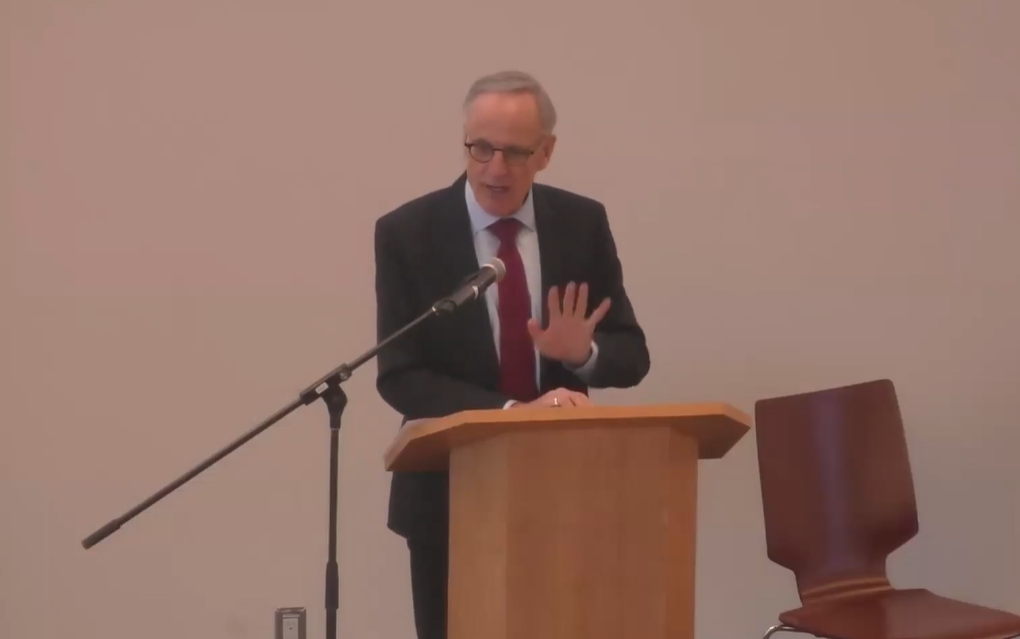
I was really pleased to be asked to be here today for a couple of reasons, partly because of the important bilateral relationship that Canada and Japan have been forging over the last number of years, particularly in parts of the world where we may not be traditional partners because we have not got a shared colonial past and we have not got shared language backgrounds. However, we have a shared commitment to peace and security, to combating terrorism and to providing opportunities for young people free from war.
And so the first reason that I want to accept this was because of the work that we have engaged with Japan and in various places around the world. The second part is because of the very fragile world in which we live. This weekend I spent two days at the Halifax International Forum on Security and that this is always an interesting place to look at defense issues, security issues, peace issues and Canada’s place in the world as we attempt to both assess the current threats and situations in the world, but also to look at Canada’s role in peacebuilding, peacemaking and peacekeeping – three activities that Canada has had historical activity in, and this is Rob speaking now, not necessarily the Government of Canada, but the level of engagement might not what I believe Canada and Canadians would like us to be involved in.
And so I come to you rather humbly as a Canadian right now to say that well, we have a very peaceful existence in the world, but our world is not at peace. And we see wars, civil wars raging across our planet as well as cross-border, transnational wars that are continuing to demand our attention every day. So while we are engaged and aware, we also have to recognize that our world is failing at bringing peace into our world.
In the midst of that, and I particularly have been spending the last few years in Africa, where approximately 30 wars are being undertaken at this time, women and girls are disproportionately affected by war and insecurity. Last year I was in Ethiopia and between 2021 and 2023, 600,000 people were killed in the Civil War in Tigray. I went to a shelter for 400 former women combatants. In this shelter, there were 400 women, survivors of that war, having been combatants in the war, and 395 babies. Think about it. 400 women coming out of a war, 395 of them as soldiers having become pregnant in the war. The violence against women is real. The violence of these women had as many of them were raped and victims of sexual violence and war, is a reminder that women and girls face disproportionate violence every time war breaks out.
Women, Peace, and Security (WPS) continues to be an incredibly important part of our government’s agenda, as do Youth, Peace and Security (YPS). These are frameworks that help to build a durable and sustainable peace. It is proven time and time again that when women are engaged in peacebuilding, peacemaking and peacekeeping, the peace is more durable. We need to bring women to the table. We need to bring women to the table, not as recruits to non-state actors and violence, but as peacemakers and peacekeepers.
Men too. And we continue to say that this is a men’s problem as much as a women’s problem. To say that peacebuilding needs to be what we need to engage in as Canadians. Young people are also recruited into non-state actors in the militias, but also as child soldiers with the state actors. And Canada continues to fight against the recruitment, the training and the deployment of child soldiers in our world. I happen to be a great fan of former Senator and General Romeo Delaire and he is one of my heroes, and his work on combating child soldiers continues to be, in my mind, every day. Too many children are recruited into violence, easily susceptible, easily taken into either non state actors or state actors.
So our national action plan on Women, Peace and Security has a foundation for a peace document. It is a comprehensive, coordinated approach bringing together 10 federal departments and also establishes a formal role for civil society groups. Civil society voices have never been more important. They will advance gender equality and women’s equality and the rights for women and girls everywhere. What I need to tell you today is, and I have had discussions with department today, we are no less committed to gender equality and to ensuring that violence against women and girls, particularly in war and on the battlefield, in that the zones around war, are forefront in our conversations, in our dialogues and in our operations toward peacemaking.
We don’t do that alone. Canada is committed to working collaboratively. So we work bilaterally with old partners and new partners. When I was in Ethiopia, I met with the Japanese embassy there, who was working on a project with Canada on counter radicalization for youth deradicalization. Some expertise that Canadians had, some expertise the Japanese had coming together to work bilaterally. We do that with willing partners around the world, whether it is Norwegian or Swiss or German or French, and even American from time to time, where we gain experience and expertise from others and work bilaterally on projects.
Canada is also completely committed to working multilaterally. The UN is a far from perfect organization, but the UN and its organs need to have continually be assessed for their effectiveness, but also continually need to be supported. If we fail to support the UN and its organs and its bodies, our world will be poorer. So Canada will defend it. We will continue to say we need to have the best instruments whether it is UN, international courts, internal court, the Court of Justice, bodies that will continue to fight for not only peace today but also accountability when war breaks out. So we will continue to do that to every forum that we are part of. G7, G20, opening up the first G20 ever to be held on African soil was a significant breakthrough. Always working, understanding that African problems demand African solutions. Asian problems demand Asian solutions, but Canada can facilitate, Canada can support. Canada can embody our values that Canadians have told us they want and valued.
So we will work together with G7, G20, with NATO partners, with the OCE, OECD partners in all the multilateral fora. Canada is a part of every club that matters. La Francophonie, the Commonwealth, OSCE, ASEAN. We are engaged in partnerships around the world to bring about peace and solidarity with people.
Canada can do more. I will be the first to acknowledge that. Civil society can also step up to the plate. Canada is going through a massive retooling of our defense and security apparatus. It needs your voice, it needs your wisdom and your thoughts to ensure we do that in the right way. We need to keep and improve our NATO commitments, but do them in such a way where Canadian values of peace, of dignity, of human rights, of international law are always first and that is what we continue to do.
We will continue to push on these issues. We do not always make the mark, but I think Canadians want us to make the mark. Thank you very much.
To Our Readers
We are currently seeking “Accept Ambassadors”, monthly supporters who can participate in our activities starting from 10 USD per month.
We would be deeply grateful if you would join us as an Accept Ambassador to help support young people in taking new paths and work together toward the resolution of armed conflict.